
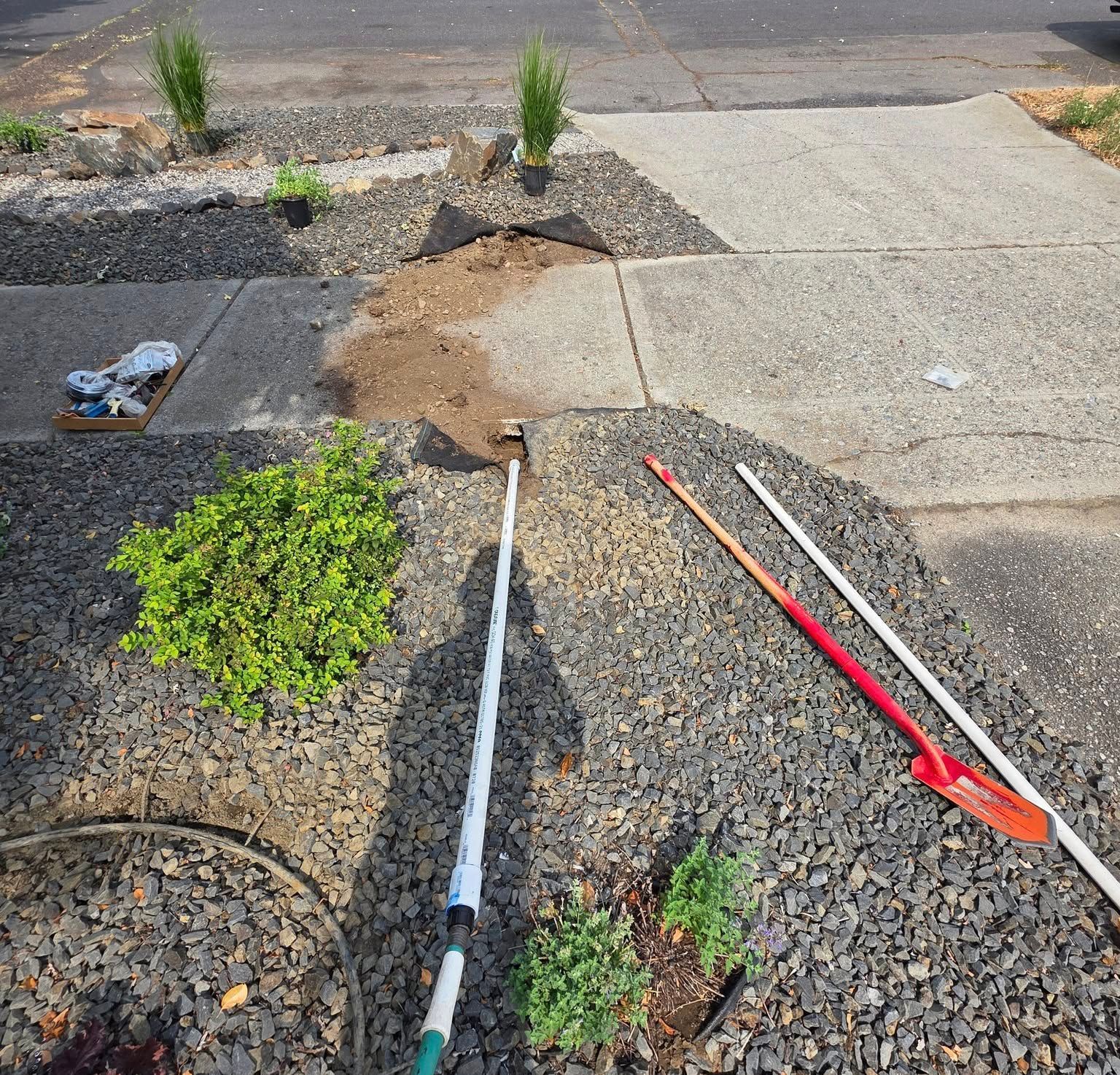
Install Systems That Deliver Water Where Roots Need It
Irrigation Installation in Spokane for homeowners replacing systems that leak or leave sections of the yard without coverage
Lawrence Landscape and Sprinklers installs sprinkler and irrigation systems for residential properties throughout Spokane, focusing on layouts that provide reliable water coverage across lawns, shrubs, and planting beds without wasting water on pavement or creating pressure problems. You receive installation based on a design that accounts for your property's layout, plant types, and soil conditions, which prevents the common issues that emerge when systems are installed without proper planning. The work includes trenching, pipe placement, valve installation, and sprinkler head positioning that matches the design specifications.
Proper installation prevents leaks caused by poor pipe connections, uneven watering from incorrectly spaced heads, and pressure drops that leave sections of the system underperforming. Spokane's soil conditions and seasonal temperature swings require installation methods that account for freeze protection, drainage, and how soil settles after trenches are backfilled. You get a system built to function correctly from the start, with guidance on operation and seasonal adjustments so you understand how to use it effectively.
If you need a new irrigation system installed or an old system replaced, reach out to discuss your property and what kind of coverage will support your landscape.
What Professional Installation Prevents Over Time
Installation quality determines whether your system runs without leaks, delivers even coverage, and lasts through multiple seasons without constant repairs. Lawrence Landscape and Sprinklers uses pipe and fittings rated for pressure and soil conditions common in Spokane, positions valves where they remain accessible for maintenance, and tests the system before backfilling trenches to catch issues early. You get installation that avoids shortcuts which create problems later, such as shallow pipe placement that freezes or poorly glued joints that fail under pressure.
After installation, you will notice that every zone delivers consistent water coverage, sprinkler heads pop up and retract correctly, and you can adjust watering schedules without causing runoff or leaving plants stressed. The system supports long-term landscape health by ensuring roots receive moisture when they need it, not just when timers run on arbitrary schedules.
Installation includes pressure testing, controller programming, and a walkthrough that explains how each zone operates and what maintenance tasks you should perform seasonally. The service does not include landscape design, plant installation, or grading work, though these can be coordinated if you are building a new landscape alongside the irrigation system.
These questions come up often, especially from homeowners who have dealt with systems that never worked right or required frequent repairs within the first few years.
What Homeowners Ask Before Installing Irrigation
How long does irrigation installation take?
Installation timelines depend on property size, system complexity, and soil conditions, but most residential systems take two to four days to complete, including trenching, pipe installation, valve placement, and final testing before backfilling.
What happens to my yard during installation?
Trenches are dug for pipe placement, which temporarily disturbs lawn and planting areas, but soil is backfilled and compacted after installation, and most lawns recover within a few weeks if seeding or sod repair is completed properly.
How deep are irrigation pipes buried?
Pipes are typically buried six to twelve inches below grade to protect them from surface traffic and freeze damage, with depth adjusted based on whether the line serves spray heads, drip zones, or main supply lines that carry higher pressure.
Why does Spokane's climate affect installation methods?
Spokane experiences freezing temperatures in winter, so systems require proper slope for drainage, blowout ports for winterization, and backflow preventers positioned where they can be drained or insulated to avoid damage when temperatures drop.
What kind of maintenance does a new system need?
You should check sprinkler heads monthly during the growing season to ensure they are not blocked or misaligned, adjust watering schedules based on rainfall and temperature, and arrange for professional winterization each fall to drain lines and prevent freeze damage.
Lawrence Landscape and Sprinklers works with homeowners who want irrigation systems installed correctly and explained clearly, so you understand how to operate and maintain the system over time. If you are ready to move forward with installation, contact the team to schedule the work and discuss your property's specific needs.